
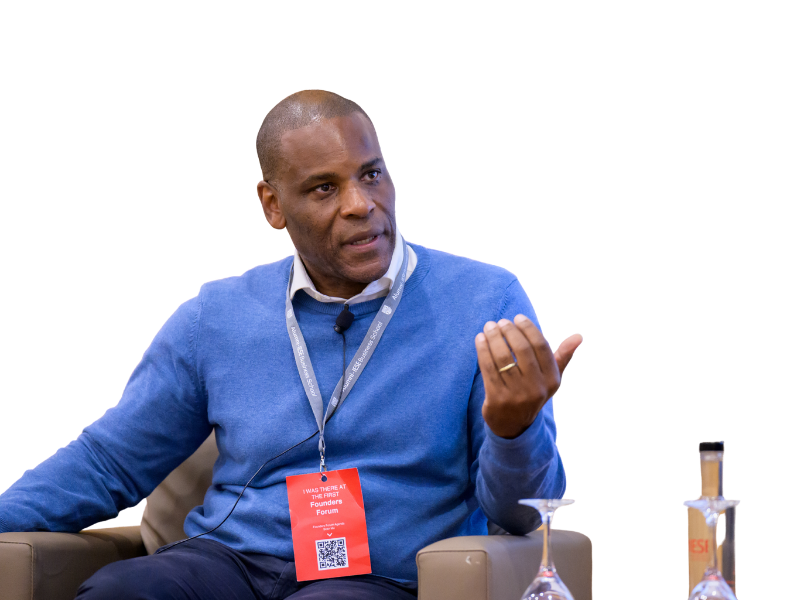
It has taken me a long time to get to this point. And now that I’m here, I want to say something that I think gets lost in most leadership conversations.
I want to see companies doing good for humanity, not just creating battery farms of productivity. I want communities to feel the positive effect of a company’s vision in their lives. I want companies to be places where people do their best thinking and add to the good name and standing of the organisation.
I want companies to understand that the well-being of their employees is not a “nice to have”. It is an internal part of a company’s responsibility. I believe these areas of focus can be reflected in the P&L. I want the workplace to be somewhere people happily go because they feel respected and listened to.
But that is not what I see most of the time.
As a coach, people know that they can tell me things that I would never repeat, and I’m both grateful but also saddened by some of the sadness and anxiety and frustration that they display simply because they work in an environment with suboptimal communication. People operating from fear, guarding their positions, building fiefdoms, unable to have straight conversations with the person sitting across the table from them. I have sat in workshops and heard insults, accusations, and frustration that has been building for years. I have had private conversations with leaders who would never say out loud what they told me in that room. The anxiety they carry is not personal weakness. It is what happens when communication breaks down and nobody fixes it. Teams drift into silos. Partnerships lose trust. Leaders perform confidence they do not feel.
This is what I see commonly:
The meeting that ends without resolution, again. The conversation that gets avoided, again. The sense that the team is technically functioning but not really pulling together. You are doing good but not doing great. You can feel it, but you cannot quite name it, and you certainly have not fixed it.
I teach in my workshops that the common denominator in every situation you find yourself in is YOU. Not your team, the market, or the board. You. You have been in every room, every conversation, every moment that got you to where you are. This is why my leadership work must start with you. The leader, the founder, the CEO, the CFO, the manager. If your work requires you to delegate, manage, influence, or be responsible for others in order to deliver your output, you are a leader. This is always the starting point.
I work with large multi national companies, and with founder-led businesses across all sectors navigating the particular pressures that come with that territory, although the context may change, the challenges don’t. Misalignment, broken trust, and conflict that nobody knows how to handle well.
The ILN Leadership Programme is built for leadership teams who are ready to have the conversations they have been putting off. It is a structured six month, immersive process that starts with you as an individual and builds outward into how your team thinks, communicates, negotiates, and handles the friction that is inevitable at senior level.
Over the course of the programme you will develop a sharper understanding of how you show up as a leader, how your team really functions under pressure, and what it actually takes to build the kind of trust that makes organisations perform at their best. We work on the internal negotiation dynamics that most leadership teams never address directly. We build the communication skills that make difficult conversations possible. And we give teams a shared language and framework for dealing with conflict before it becomes costly.
The programme combines a two-day residential off-site, a leadership assessment, and ongoing one-to-one, group, and team coaching. It is designed for CEOs, founders, HR directors, and C-suite members who understand that the health of their leadership team is the single biggest lever they have on organisational performance.
Everything in this programme sits on one foundation. Emotional intelligence applied to leadership and negotiation. How you understand yourself, how you manage your reactions, how you read the people around you, and how you use all of that to lead more effectively.
After thirty years of working with leaders I am convinced that strategy alone does not separate high performing organisations from the rest. The quality of the leadership team does. This programme is for the ones ready to raise that bar. If you are ready to do that, let’s talk.