
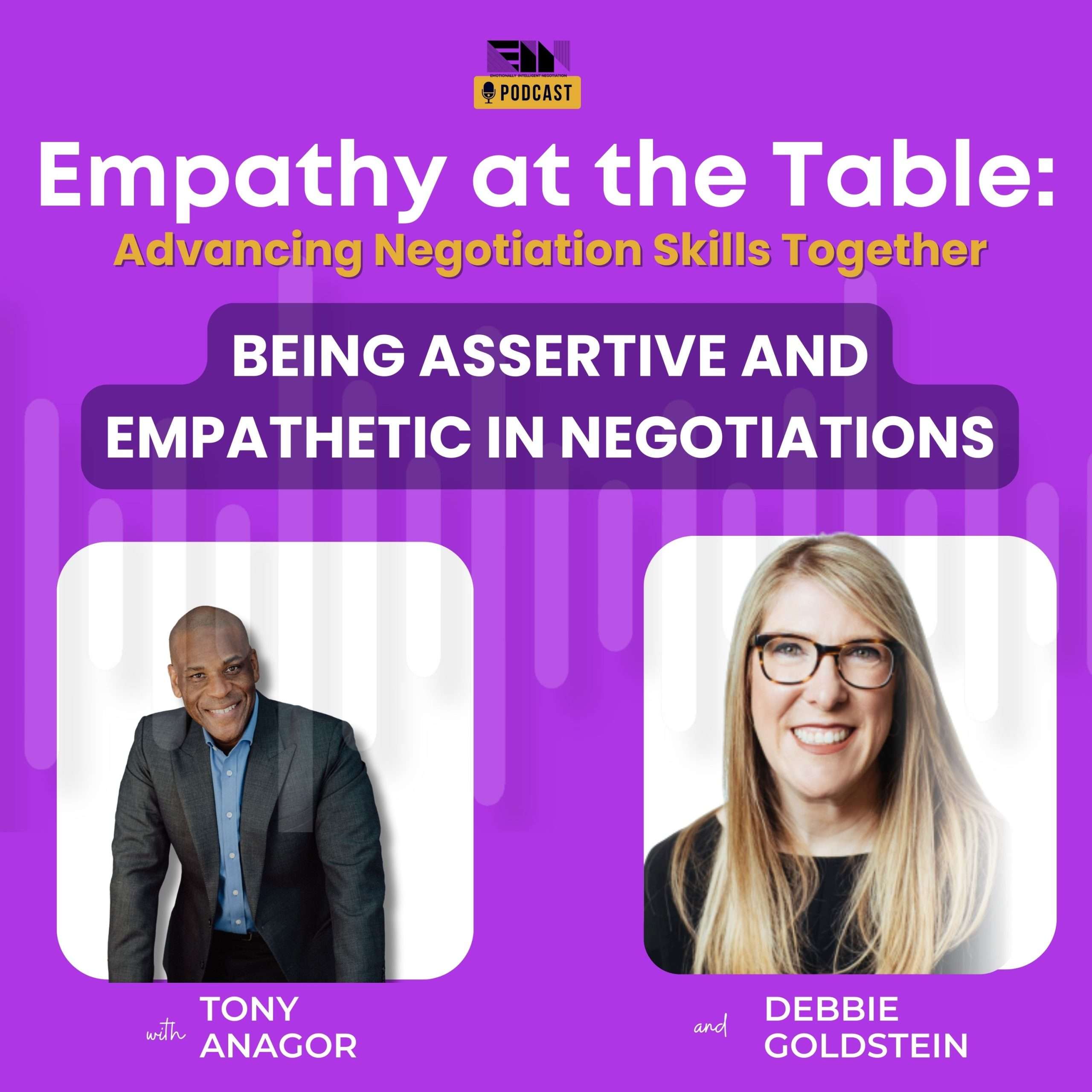
In the world of high-stakes leadership, where every deal feels like a make-or-break moment, many professionals believe that successful negotiation is all about the perfect “yes.” But what if the true power lies in knowing when—and how—to say a strategic, respectful “no”?
In a recent episode of Empathy at the Table, I sat down with Debbie Goldstein, a leading voice in the field of emotionally intelligent negotiation. As Managing Partner at Triad Consulting and a lecturer at Harvard Law School, Debbie has spent years at the intersection of academic theory and real-world leadership. Her perspective is refreshing, practical, and, frankly, essential for anyone who wants to build trust, lead with purpose, and negotiate more effectively.
This conversation wasn’t just another take on negotiation tactics—it was a deep dive into how empathy, emotional intelligence, and clarity can transform not only your negotiation results but your leadership ethos.
Emotional Intelligence: The Hidden Advantage in Negotiation
One of the biggest myths in business is that empathy is soft—that emotional intelligence has no place in high-pressure conversations. Debbie turns that idea on its head.
She describes emotional intelligence as the ultimate leadership edge: the ability to read the room, understand unspoken dynamics, regulate your own responses, and show up with both strength and sensitivity. In emotionally intelligent negotiation, empathy isn’t weakness. It’s strategy.
When we discussed how emotions show up in negotiations, Debbie shared a personal technique that struck a chord: “When someone is emotional or aggressive,” she said, “I picture their emotion as a fireball flying toward me. I don’t let it hit me—I catch it, gently place it on the ground, and stay curious.”
That image says everything about how top negotiators manage intensity: not with defensiveness or control, but with grounded curiosity and emotional regulation.
Building Trust, Not Just Closing Deals
So many leaders are still stuck in a “win-lose” mindset, chasing short-term victories and measuring success by how much they’ve claimed. Debbie challenges this outdated view and instead champions what she calls value-based negotiation—creating bigger outcomes by genuinely understanding what matters to all parties.
“Would you rather have a big slice of a small pie,” she asked, “or a smaller slice of a much bigger pie?”
This mindset shift—from competition to collaboration—is central to emotionally intelligent negotiation. It’s also one of the core pillars in the EIN framework: creating value before capturing it. The best negotiators don’t rush to claim what they want. They listen, ask better questions, and build trust first.
Debbie’s experience with executive teams shows that when people feel heard, respected, and understood, they’re more likely to move beyond rigid positions and co-create meaningful solutions. And in today’s leadership landscape, that’s a non-negotiable skill.
The Power of a “Good No”
One of the most powerful insights from our conversation was Debbie’s work on what she calls the “good no.”
Too often, leaders say yes when they shouldn’t—because they fear disappointing others, want to avoid conflict, or believe that agreement is the only way forward. But as Debbie explains, a well-communicated no can protect value, preserve trust, and open up better long-term outcomes.
She’s even writing a book about it.
As we discussed, the real art lies in how you say no. A “good no” is rooted in self-awareness, clarity, and emotional intelligence. It’s not about shutting people down—it’s about setting boundaries with respect. It allows leaders to stay authentic and aligned, without burning bridges.
This skill—saying no with empathy and firmness—is especially important in strategic negotiations where pressure runs high. It helps protect relationships, prevent resentment, and ensure that agreements are sustainable.
Strategic Negotiation Training for the Modern Leader
Throughout the episode, Debbie reinforced a critical point: negotiation isn’t a performance—it’s a conversation. And to lead it well, you need more than tactics. You need presence. You need preparation. And above all, you need empathy.
From CEOs negotiating mergers to founders securing investment, the ability to blend clarity with kindness is what sets emotionally intelligent leaders apart. These are the skills that allow you to build trust, manage conflict, and navigate complex dynamics without compromising on outcomes or values.
If you’re looking to strengthen your negotiation skills, rethink your leadership style, or simply learn how to handle tough conversations with more clarity and confidence, this episode is for you.
Whether you’re leading a team, scaling a business, or simply having one of those conversations this week—Debbie’s insights will give you the tools to show up with more presence, more power, and more empathy.
And sometimes? The most powerful thing you can bring to the table is a well-timed “no.”