
We’ve already introduced Emotionally Intelligent Negotiation (EIN)—the shift from pressure and posturing to empathy and alignment. But once you’ve grasped the basics, the real transformation begins when you apply its Three Core Pillars.
Whether you’re leading a team, scaling a company, or navigating complex stakeholder relationships, these pillars serve as your framework for resilient, sustainable negotiation outcomes.
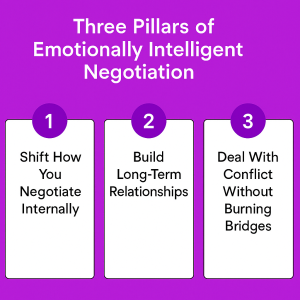
1. Shifting How Teams Negotiate Internally
Most negotiation frameworks focus externally—clients, suppliers, investors. But what about the internal dynamics that often cause the biggest breakdowns?
Organisations don’t fail because of poor strategy—they falter when departments pull in different directions. Emotionally Intelligent Negotiation turns internal silos into strategic alliances by focusing on alignment without flattening unique perspectives.
When emotionally intelligent internal negotiations become part of your leadership culture, you stop firefighting. You start building.
2. Building Long-Term Relationships and Partnerships
Every founder and team leader has been taught to “close the deal.” But what happens after that?
EIN re-frames negotiation as the starting point of a long-term relationship, not the end of a transaction. It centres trust, transparency, and mutual benefit—which means fewer renegotiations, stronger brand loyalty, and a reputation that opens doors.
You’re not just negotiating for today. You’re setting the tone for what comes next.
3. Dealing with Conflict
Let’s be honest: most teams don’t manage conflict. They avoid it—or worse, let it fester.
This pillar tackles the most uncomfortable but necessary skill set: how to face conflict with emotional regulation, active listening, and assertive communication. Whether it’s internal politics or external disagreements, EIN transforms tension into progress.
Conflict doesn’t have to be a deal breaker. Handled well, it becomes a catalyst for clarity, innovation, and deeper connection.
Why These Pillars Matter
These aren’t just soft skills—they’re strategic advantages. If you’re scaling a company, leading change, or steering high-stakes conversations, the ability to navigate these three domains sets apart good negotiators from transformational leaders.

Ready to bring Emotionally Intelligent Negotiation into your organisation? Book a call with me to explore how this framework can transform communication and collaboration across your teams.